

A story of family, duty and struggle for control, set against a city at war and the closing years of an old order.
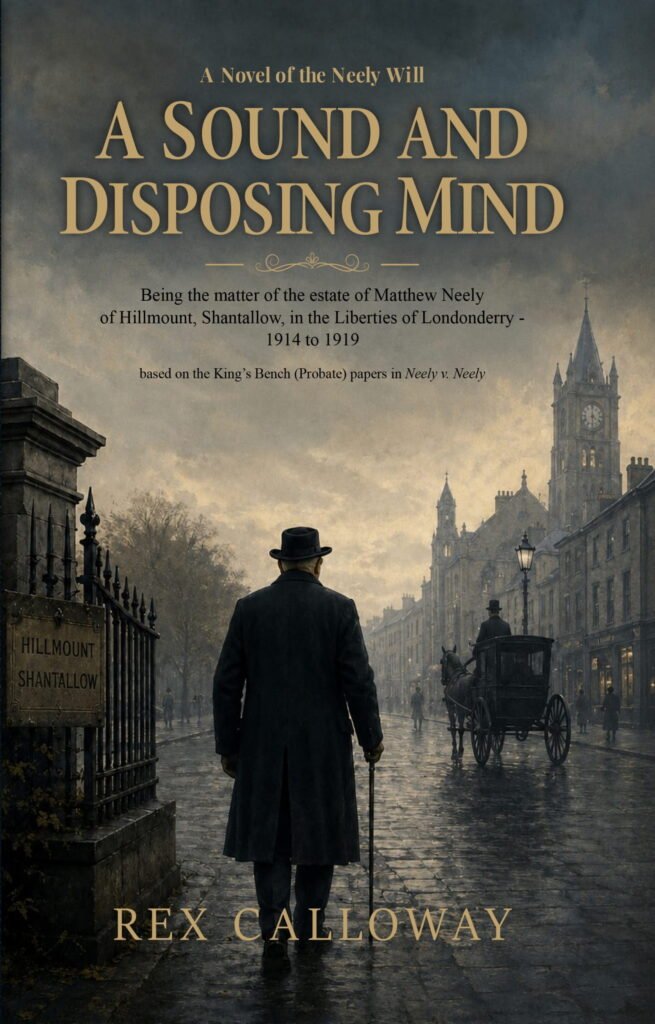
Londonderry, 1919. A dead man’s will. A family at war. Twelve jurors summoned to decide whether he was in his right mind when he signed it.
Matthew Neely built Hillmount on a corner of the old Laird farmland at Shantallow, outside Londonderry, a fine house on the very ground his wife’s people had farmed. He was already making and unmaking his will when a stroke stilled the hand that signed it, and for the last years of his life the old fruit merchant went about the town telling his story to anyone who would listen, while the two sides of his family, his wife’s people, the Lairds, and his own, the Neelys, fought a long, cold war over who would keep the house and the money that went with it.
He made and changed his will fourteen times. His solicitor kept worried notes about his mind. His doctor, asked the impossible question, would say only: I can’t say he is unfit. And when Matthew Neely finally died, in a hotel room in December 1918, the family went to court.
Based on the real probate papers in Neely v. Neely, the wills and codicils, the doctors’ letters, the sworn statements of tailors, barbers and cattle-dealers, this novel tells the story in many voices, each speaking from inside its own loyalty: the widow in black, the undertaker nephew, the orphaned nieces, the emigrant brothers scattered from Ontario to Adelaide. The reader, like the jury, must weigh them.
A story of land, love, emigration and inheritance, and of the five words on which everything turned: of sound and disposing mind.